Afterlife in Genesis

Is the idea of an afterlife new to the New Testament? In fact, there is hope of life after death even as far back as the Joseph narratives in the book of Genesis.
Blog Category:
Is the idea of an afterlife new to the New Testament? In fact, there is hope of life after death even as far back as the Joseph narratives in the book of Genesis.

This is a note to self, where I'll find it, to switch from using 7-Zip to using NanaZip for Windows. WinZip became redundant when Windows integrated archive files into Explorer, but 7-Zip has good right click integration. For Windows 11, that doesn't work as well, so use a fork called NanaZip.

This is not a long post, but I've just seen something I've never seen before.
Matthew 12:1-14 illustrates and adds colour to Matthew 11:28-30.
Matthew 11:28-30 are some of the most beautiful words in the New Testament:

At Trinity Church Scarborough, we're preaching through Proverbs throughout the autumn.It's not a book I've ever studied in any detail, so I've taken a step back, read a few things others have written, and collected thoughts I've had over the years as I've read through Proverbs as part of my own personal Bible reading. I wanted somewhere to jot down the things I've learnt, so I can refer to it later, and thought this public space would be good as it may help others too.

Here's a detail I've just noticed, and rather love.
Psalm 95:7 in the NIV reads as follows:
"For he is our God
and we are the people of his pasture
and the flock under his care."
Take that phrase "flock under his care" and look more closely.
וְצֹ֣אן יָד֑וֹ
Literally "the flock of his hand".

Today, I had a very annoying problem that I managed to fix. It's a couple of hours of my life that I won't get back, and I found very little online to help me.
So, to help anyone else with the same problem, here's the problem and the solution.
For what it's worth, this is with Fedora 39, KDE Plasma spin. But I honestly suspect that makes little difference. Other distros (Debian, Ubuntu, etc.) are probably just the same.
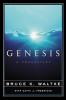
I'm a big fan of Bruce Waltke's commentary on Genesis (paid link). He does a great job at holding together two tasks that are vital. It's easy to lose one whilst trying to do the other. He both pays attention to the narrative craft of Genesis, and at the same time tracks the overall storyline of Genesis and what the book as a whole is communicating.

In November, I ran a series of blog posts on the book of Revelation. Preparing to preach it, some day, I've been trying to get to know the book, to work out how it functions, how it communicates, and so on. I've wanted to do this deductively at first, which means reading the text lots and lots of times, and noticing things.
So far, I've had 3 posts:

This post follows on from two previous posts on the book of Revelation. In the previous posts I argued that the vision of Revelation 4-22 is telling a single, coherent story, and then explained how the first 3 chapters of the book connect to what follows. That structure indicates that it is important to be clear of the messages given in Revelation 2-3 if we are to hear Revelation 4-22 correctly. This post attempts to draw out those messages to the 7 churches, so we can tune in correctly to the visions that follow.

The other day, I wrote about my reading through the book of Revelation, as I seek to work out the kind of book and how it communicates. This post follows on from that, and looks at how Revelation 1-3 connects with Revelation 4-22. Where do the letters fit in? What is the structure of the book as a whole?
Recent comments