Written on his hands
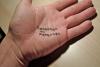
When you have something you do not want to forget, do you write it on your hand? Some people write things on the palms of their hands; others write things on the back; others don't do this at all.
Blog Category:
When you have something you do not want to forget, do you write it on your hand? Some people write things on the palms of their hands; others write things on the back; others don't do this at all.
Sometimes I hear it said that Old Testament ethics can be summed up in the command to fear God, and New Testament ethics can be summed up in the command to love God.
Related, it is sometimes observed that the Old Testament summary of the law is ten sentences that prohibit ("Thou shalt not" - those making this point usually do so quoting the old fashioned way of putting that), whereas the New Testament command is two sentences that are about love ("Love the Lord your God with all …; love your neighbour as yourself".)
Psalm 33:3 says this:
Sing to him a new song; play skilfully, and shout for joy.
Note the three ingredients here of how we are instructed to sing to God.
My friend Steve Jeffery posted a short post on his minister's blog.
So short, it's hard to know which bit to quote.
And yet so wonderful, so true, and so necessary to be chewed over, that I think I'll just quote all of it.
I hope Steve doesn't mind - especially if I link to the original post where I got it from
I owe to my friend John Goulding the following observation:
In Jonah 4, God provided a plant to shield Jonah from the heat. The verb "to provide" is a key-word in Jonah - it's
This week, I'm wrestling with the book of Ecclesiastes, in preparation for preaching on chapter 12 this coming Sunday.
Oh, the pain of leaving things out.
I'm preaching on 1 Kings 11-12 on Sunday. As is always the case with preaching, the aim is to help people to hear what that part of Scripture is saying to us today. And in order to be clear, you have to be ruthless. So often, there are all kinds of really interesting things you've learnt and discovered in the text, and they have to go on the proverbial cutting-room floor.
I'm preaching on 1 Kings 2 this Sunday, and it's a trickier passage than it first looks.
David had previously overlooked two murders committed by his commander in chief, Joab, and pardoned the insolent Shimei.
Then the time comes to hand over the kingdom to Solomon. (So thank you to King Juan of Spain for choosing this week...). He urges Solomon to bring justice to these two.
So here's the question: Why did David change his mind?
I've never noticed this before. Sometimes, you notice something in the Bible, it's then so obvious that you wonder why you didn't see it there before. That's a good sign that it's on the right track - it's noticing what's there, rather than reading in things that are not there. It also means it's highly likely that lots of other people have seen it before, and that I'm just playing catch-up - so there are no claims to originality here.
The opening of the book of Samuel anchors the book firmly in its context, as a book following on from Judges.
Did you know that Leviticus 20:21 was partly responsible for starting the protestant reformation in England.
Recent comments